Saturday, 4 October 2014

Thursday, 28 August 2014
"Time Team": an archaeological show that's airing for 20 years
In Mr. Ganse's Archaeology course, we started watching the series "Time Team".
We watch one episode in the 1st period and then discuss/criticize it in the 2nd period.
http://www.wessexarch.co.uk/timeteam/reports
http://www.wessexarch.co.uk/blogs/time-team
Friday, 22 August 2014
Using "Digging for the Truth" as Swiss Cheese
Currently I am taking an archaeology course by Mr.Ganse at my school.
I once took a short summer session on archaeology and since I got a hundred on the test he offered me a chance to be his TA for this semester's course.

Yesterday, we used the first period to discuss the 5~6 basic methods used to trace the date of artifacts. Than we used the second period to watch a flimsy documentary on archaeology and criticize it.
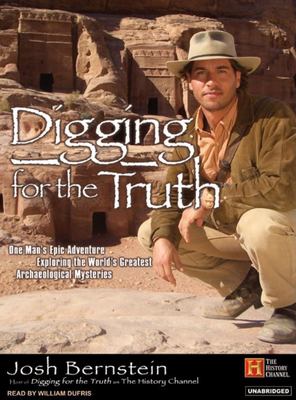
The documentary we watched was " Digging for the Truth"
Actually, I had bought a book with the same title when I visited the British Museum in 6th grade.
(http://www.amazon.com/Digging-Truth-Adventure-Exploring-Archaeological/dp/1400153441)
At the time, I only flipped through a few pages and stopped reading.
Now, I'm pretty glad that I did so because the documentary showed that whether by purpose or not, Josh Bernstein-the "explorer"-kept a very gullible attitude throughout his quest. It was as if he was an amateur with money who simply wanted to fulfill fantasies that he acquired while watching Indiana Jones.
I once took a short summer session on archaeology and since I got a hundred on the test he offered me a chance to be his TA for this semester's course.
Yesterday, we used the first period to discuss the 5~6 basic methods used to trace the date of artifacts. Than we used the second period to watch a flimsy documentary on archaeology and criticize it.
The documentary we watched was " Digging for the Truth"
Actually, I had bought a book with the same title when I visited the British Museum in 6th grade.
(http://www.amazon.com/Digging-Truth-Adventure-Exploring-Archaeological/dp/1400153441)
At the time, I only flipped through a few pages and stopped reading.
Now, I'm pretty glad that I did so because the documentary showed that whether by purpose or not, Josh Bernstein-the "explorer"-kept a very gullible attitude throughout his quest. It was as if he was an amateur with money who simply wanted to fulfill fantasies that he acquired while watching Indiana Jones.
2 tracks that work as OST compilations for Haruki's novel Norewegian Wood
http://8tracks.com/koraysoner/norwegian-wood
http://8tracks.com/ecem/norwegian-wood
http://8tracks.com/ecem/norwegian-wood
Found an introduction of my self written in early January of 2012
Thinking is an arduous
task. Philosophy helps one in dealing with this tiresome yet essential and fun
task. As a student of KMLA with
interest in a variety of fields such as linguistics, anthropology, and
logistics, which are all areas requiring intense thinking activity, interest in
philosophy was only natural. Throughout my journey as a scholar in such fields, studying and exercising
philosophical concepts will be in high demand as well. Therefore, I decided to participate in the International Philosophy Olympiad (IPO) to test the
extent of my knowledge in philosophy and
experience what it is like to compete with other people of my age using philosophical skills.
But, IPO is not just about philosophy. Rather, it is also a Colosseum where eager
students compete with their writing skills. If
so, my Korean composition teacher’s comment that my essays are crude and rough,
yet powerful and breath-taking in their own way should encourage me. Generally,
I try to focus more on the content and logics of what I write, rather than how elaborately
it might be shaped. Hence, I am not a stranger to criticisms regarding bumps
that might make some people hesitate to read on. Still, I have hopes that such
problems are primarily for my Korean essays. During the last four months, I
have engaged in writing journals and reviews on my blog for my English
composition class, where I was commented that my writing style is very
compacted yet active, helping readers to move quickly and get to point.
Ever since I
learned my letters and made reading a hobby, I almost never found myself
without a topic from a book to think about. Books like A Tale of Two Cities or
Lord of the Flies were my favorites because they gave me something to ponder
on. Such books often describe phases in one’s life when suddenly, one stops
taking the world around him or her as granted.
Reading and discussing on topics regarding such books helped mold my
views and opinions on the world.
As
for philosophy, it is not
a foreign topic and I had the fortune of getting in contact with it several
times. At such times, I tried to compare my thoughts with the thoughts of
scholars that lived ahead of me and find ways in which such scholar’s thoughts might
help structure mine better. I hope participating in this year’s IPO will benefit
me in the field of philosophy since
oftentimes it is hard to find friends to discuss on
such serious topics and therefore my thoughts might be a bit radical and
centered toward my experiences.
Thursday, 13 February 2014
Reading journal: The Student by Anton Chekhov
At first
glance, Anton Chekhov’s The Student seems
like a master piece that effectively portrays the Russian countryside of his
time. However, a few rereads brings readers to the conclusion that Chekhov
attempted more than simple scene depiction in his work. Chekhov’s seemingly
mundane choice of characters and the landscape are in fact, richly dipped in his
view of the Russian society.
After my second reading, it dawned upon me that for Chekhov to write about Ivan’s meeting with the two widows, mentioning the laborers was not necessary. Yet, the laborers seem to serve a certain purpose. Around the time when The Student was first published, the 1890s, socialism was gaining its hold in Russia. Socialism was at a stage where it stopped remaining a sophisticated philosophy for the learned and rather began transforming into a craved dream for the oppressed. Chekhov could have taken notice of such a trend in the society and implicitly embed it in his writings. The contrast between the Lukerya and her mother, Vasilisa, adds support to this analysis. Lukerya, a village peasant with a “stupid face”, does not make any attempt to converse with Ivan, but rather stared “immovably at the student” and “flushed crimson”. On the other hand, Vasilisa, “expressed herself with refinement” and showed “a soft, sedate” smile to Ivan. Chekhov’s portrayal suggests that Lukerya, or perhaps, the younger generation at the time, was ready to show resentment to the upper class—Ivan, in this case—whereas Vasilisa, or perhaps, the older generation at the time, still felt obliged to willingly serve and make sacrifices for the upper class. It seems Chekhov made his support for the oppressed plainly.
After my second reading, it dawned upon me that for Chekhov to write about Ivan’s meeting with the two widows, mentioning the laborers was not necessary. Yet, the laborers seem to serve a certain purpose. Around the time when The Student was first published, the 1890s, socialism was gaining its hold in Russia. Socialism was at a stage where it stopped remaining a sophisticated philosophy for the learned and rather began transforming into a craved dream for the oppressed. Chekhov could have taken notice of such a trend in the society and implicitly embed it in his writings. The contrast between the Lukerya and her mother, Vasilisa, adds support to this analysis. Lukerya, a village peasant with a “stupid face”, does not make any attempt to converse with Ivan, but rather stared “immovably at the student” and “flushed crimson”. On the other hand, Vasilisa, “expressed herself with refinement” and showed “a soft, sedate” smile to Ivan. Chekhov’s portrayal suggests that Lukerya, or perhaps, the younger generation at the time, was ready to show resentment to the upper class—Ivan, in this case—whereas Vasilisa, or perhaps, the older generation at the time, still felt obliged to willingly serve and make sacrifices for the upper class. It seems Chekhov made his support for the oppressed plainly.
Chekhov’s
choice to end the story by portraying an seemingly uplifting scene of Ivan made the story
stand out among other short stories. The ending scene in which Ivan looks down
upon the village from the hill might be mistaken for a sign that Chekhov
approves of Ivan’s pride. However, the hill scene seems to be rather a device
of black humor that serves as the finishing touch of Chekhov’s cynicism. Ivan’s
previous actions, such as interrupting the two widows’ peaceful evening so that
he could recite his practiced preaching marks him as an immature youth who has
not yet learned the trick of viewing the world from other’s perspective. Thus,
Ivan’s hope is understood not as one that is shared by others, such as the two
widows, but rather as one that is valid only to Ivan. Ivan mistaking his preaching
to be successful is a source of black humor that earns The Student the title of the “Perfect Short Story”.
An atheist, Chekhov could have implied his distaste for religion. Ivan preaches the widows on Jesus and Peter. Ivan’s story of Jesus and Peter is like a décalcomanie to Chekhov’s story of Ivan and the widows. Both stories contain a preacher, working class people that do not welcome the preacher, and a third person that sympathizes with the preacher. Chekhov makes this connection even stronger by making Vasilisa weep just as Peter had wept for Jesus. If the author, Chekhov, had been a religious man, it would be reasonable to view Ivan, who is compared to the holy Jesus, in a positive light. Yet, considering Chekhov’s distaste of religion, it would rather be plausible to view Jesus, who is compared the Ivan, the joke of the story, in a negative light. This interpretation gains even more validity by the fact that the church was the symbol of the old regime that enlightenment thinkers and socialists aimed to topple down.
 In a final
analysis, Chekhov uses his cynical, yet masterful manner of writing to create a
short story that effectively expresses his thoughts on the Russian society. His
implicit portrayal of socialism seeping into the oppressed people implies his
approval of the society’s trend. The black humor present in the hill scene
shows his cynical view of the society. Comparing Ivan to Jesus is an expression
of his contempt at the Russian church and the old regime in general.
Sunday, 2 February 2014
30 things about myself

2. I share my room with the same roommates back from last semester
3. I dropped the habit of using English names because I felt that my name, "David" is too biblical for me, who does not go to church
 >
4. I'm seriously worried about drinking because one side of my family members can't drink at all. Some of them actually fainted after trying beer at college. But, the on the other side, its common for one person to drink two bottles of Soju alone
5. I'm expecting double eyelids, because every male on my father's line acquired them after enrolling in the army
6. I'm interested in shoes. I have a habit of examining my friends' shoes when we are at 민교관 and people leave their shoes on the door steps. I can guess pretty accurately who somebody is just by looking at their shoes

7. I love music
8. But I couldn't listen to music before junior high because my mother basically banned music from the house
9. Instead I spent all my spare time reading books when I was little
10. My favorite in childhood was [My Sweet Orange Tree] by Jose Mauro de Vasconcelos
11. I still keep reading as a hobby and have added such books as [A Tale of Two Cities] by Charles Dickens, [The Geography of Thought] by Richard E. Nisbett, [Kite Runner] by Khaled Hosseini, and [Blink] by Malcolm Gladwell to my list of favorites
12. I started listening to music by going to a book store that played songs by SG Wannabe everyday
13. Once introduced to the heaven called music, I found that my father is a music lover like me and expanded my music listening to my father's car
14. During these days, I came to love old songs by musicians such as Simon& Garfunkel and Queen
15. After that a big boost occurred in my second year at high school. I took an year off from school. At this time I would listen to music all night if I felt like it. My favorite musicians at this time were Gotye, Katatonia, Sigur Ros, Broken Valentine, Smashing Pumpkins, Aphrodite's Child, and Coldplay. Even now, I like these musicians the best because I still remember that they kept me on my feet in that year
(http://haeukwriting.blogspot.com/2013/08/katatonia-band.html)
16. One point that I found interesting was that despite listening to all kinds of strange music, I never listened to hip hop. But, that changed in last fall when 김현채 and 구한결 recorded dissing raps at 김홍순. Infatuated, I started listening to Simon D, Jazzyfact, and other such hip hop musicians as well
(http://haeukwriting.blogspot.kr/2013/08/kmla-rappers-make-parodies-of-dissing.html)
17. All those books and music would portray me as a geek, which I actually am. But, I'm also into Ultimate Frisbee
18. I was introduced to Ultimate Frisbee when I met Mr. Hinde at KMLA. With him and some of my friends who by chance happened to take Mr. Hinde's class at the time, I began playing Ultimate Frisbee
19. My passion for Ultimate Frisbee reached its peak when I came back to school from an year's rest. Again by chance, Ultimate Frisbee introduced me to new friends, with whom I revived the Ultimate Frisbee Organization
20. I not only came to play Ultimate Frisbee but also became interested with professional leagues - specifically, their history and the problems with the administration
21. Among the teams registered in MLU, I support San Francisco Dogfish and Boston Whitecaps
(http://mlultimate.com/)
22. But, my all time favorite team is the Buzz Bullets, a Japanese team that does not compete in professional leagues but still manage to thwart USA all-stars half the time they meet
(https://www.facebook.com/BuzzBullets)
23. Other than Frisbee, music, and books, I like traveling
24. I even skipped school for a whole month in 6th grade and traveled around Europe
25. My worst memories were at Prague where people not only didn't speak English but was also hostile to anyone who tried to communicate in English
26. Because of their antagonism, it took me three hours just to send some stuff at the postal office

27. My best memories were at Pompeii and Sorrento. Pompeii, I liked because of its historical significance, but Sorrento I loved because it was simply the most beautiful town I've ever seen to this day.
28. Other than, Europe, I've been to Egypt
29. I've never played League of Legends
30. Right now, 2:14 am of Feb, 6th, 2014, I want to tan myself at a terrace in Casablanca, Morocco with my roommates
Thursday, 28 November 2013
Nate Reuss
Nate Reuss is the lead singer of the award-winning band Fun .
At first I disliked him for his voice.
It was characteristic to the extent where I could not listen to the music without drawing his face in the air.
Since it distracted me from both appreciating the music and doing whatever task I chose to do at the time, I stopped listening to him after a couple of tries.
But, a few weeks later, I came upon the song Just Give Me a Reason by Pink.
Listening to the song, I found that there was a man's voice floating in and out and I got really curious because the voice colour matched the song so well.
It was Nate Reuss.
That was why I, on August 31st, made up my mind to write something about Nate Reuss.
He was born in Iowa city, Iowa on February, 26th, 1982.
For most of his childhood, he lived in Arizona because of repeated experiences of pneumonia.
In high school he joined the band Nevergonnascore and released an EP, The Byron Sessions.
After graduating from his high-school in 2000 he decided to pursue a career in music.
Meanwhile, he took a job at a law firm to support him.
From 2001 to 2008, he was part of the band Format.
The members were Ruess, Sam Means, Mike Schey, Don Raymond, Marko Buzard, and Sean McCall.
The band released a demo and two EPs.
The demo titled EP was self-released on August, 9th, 2002 and was re-released with national distribution on June, 3rd, 2003.
The first EP titled Interventions+Lullabies was released on October, 21st, 2003 from the Elektra Records.
The second EP titled Dog Problems was released on July, 11th, 2006 from the Vanity Label.
After the breakup of Format in 2008, he contacted Jack Antonoff of Steel Train and Andrew Dost of Anathallo to create the band Fun.
He has been and still is a part of the band.
On August, 25th, 2009, they released their debut album, Aim and Ignite, from Nettwerk.
On February, 21st, 2012, they released their second album, Some nights, from Fueled by Ramen.
(ps- he looks really drunk and worn in this clip.. maybe his stylist should be changed?)
Paragraph length analysis of the Neck by Roald Dahl- 1st draft
 At first glance, the journalist from the Neck might appear as a mere window for the readers to take a peek inside the story. After all, when he rests on the white bench, chatting with Basil Turton, he makes no attempt to notify Mr. Turton that Mrs. Turton is flirting with Major Haddock. His tendency to not interfere with the issue of the unfaithful couple is also apparent in the scene where Mr. Turton has to free Mrs. Turton from the sculpture. To take a daring step, it might even be suggested that the journalist, like many other narrators in Roald Dahl short stories, has no influence at all in the story and only serves as an observer. Nonetheless, the presence of the journalist plays an essential role in the story. His attempt at not notifying Mr. Turton can be understood as a deliberate action. To be more specific, if Mr. Turton was on a walk with someone with a different personality than the journalist, the guest could have tried to notify Mr. Turton and Mr. Turton might have gone back to the house instead of going to the couple. Moreover, the journalist’s impassiveness plays an even more important role when they meet the unfaithful couple. Had the journalist aided Jelks in tempting Mr. Turton to choose the axe, the result might have been different. Therefore, it is perhaps more accurate to assume that the journalist is a character with the important task of not attempting to influence Mr. Turton. In this sense, the journalist is more than a simple window.
Thursday, 21 November 2013
"Tales of the Unexpected" and human nature

Roald Dahl conveys to the readers that human nature is more close to a murky pond after a flood than a clear crystal. His twists of plot often serve to make the readers realize that humans have many sides and that it is erroneous to cage them in a single image. Therefore, Dahl pays special attention to his writing so that he can convey multiple sides of human nature in the limited form of a "short story". To illustrate, Dahl tends to develop his characters not through direct description in the narrator's voice, but rather through dialogues and the relationship between different characters. One of the episodes that clearly demonstrate Roald Dahl’s methods is [Lamb to the Slaughter]. Mary Maloney's description of the way she loves Patrick Maloney is a great example of how Roald Dahl indirectly builds his characters. Roald Dahl narrates that Mary
“luxuriate in the presence of this man, and to feel……that warm male glow.”
Such a description presents the readers with an image
of a love relationship which is, for Mary’s part, beautiful but also frighteningly
perverted. As a result, the readers come to suspect that despite the calm
demeanor that she shows prior to Patrick's return home, she could possess
an eerie twist in her personality.
Roald Dahl probably preferred such an indirect way of portraying his characters because he knew that direct portrayal is more useful for conveying one aspect of a character than conveying multiple aspects of a character. In other words, Roald Dahl would have acknowledged that in the few pages that are allowed for a "short story", direct portrayal of a character could result in readers making hasty judgments of characters and eventually hinder readers from grasping an understanding of all sides of the characters. To be specific, in [My Lady Love, My Dove], Dahl does a wonderful job of showing two sides of human beings with Mr. and Mrs. Snape. At first, the Snapes are portrayed as a decent young couple. However, as the plot unfolds, the Snapes are shown to possess a different side as well. In the later half of the story, they are portrayed as money-seeking people with no respect for rules, rather than civilized man and woman with manners. Some might say that actually, the Snapes have only one personality since the decent side of them was only a ruse and therefore does not count. Yet, it must be noted that humans adjust themselves to different situations. By showing how the Snapes express different aspects of themselves in different circumstances, Dahl can convey to the readers that people should not be confined to one aspect that they show in one circumstance.

Tuesday, 12 November 2013
A paragraph-length analysis on "The Picture of Dorian Gray"
At first glance, Oscar Wilde's "The Picture of Dorian Gray" might appear as a book influenced by many stereotypes. Among them, a certain stereotype on artists seem to tempt Oscar Wilde into making fun of the lives that artists living in the Victorian age were assumed to lead. After all, when Dorian Grey discusses Sybil Vane’s death with Basil Hallward, he makes a statement that depends on a stereotype regarding actors. Dorian Gray states that “They are good husbands, or faithful wives, or something tedious”. This statement shows that he has certain expectations of how an actor/actress would lead his/her life. Moreover, he brands the expected life style as “tedious” and goes on to refer to such a lifestyle as “middle-class virtue, and all that kind of thing”. These statements imply that he looks down upon the lifestyle of actors and that he expects other gentlemen—men who are distinguished by birth and upbringing—to share such an attitude. However, Dorian Grey’s opinion on the supposed lifestyle of actors/actresses is not exclusively expressed with regards to Sybil Vane, but is rather applied in general to people other than the aristocrats—the gentlemen and the ladies. In various occasions—especially at dinner meetings—Dorian Grey, Lord Henry, or others invited to the meeting would make negative comments on the middle-class and the working class. To present a different example, Mr. Ashton, one of the few characters who are not from a noble background and yet commands a certain level of respect from aristocrats, is also branded in a similar way as Sybil Vane is. Nonetheless, Lord Henry applies the ‘middle-class stereotype’ on Basil Hallward—a gentleman with an Oxford education—when he states to Dorian Grey, “Don’t squander the gold of your days, listening to the tedious”. Therefore, it is perhaps more accurate to assume that Oscar Wilde wished to ridicule people with a certain lifestyle, rather than people with a certain occupation or people from a certain social class. In this sense, the constantly reappearing stereotype of artists does not imply more significance of artists but implies that artists typically fall into the category of people with the lifestyle branded with tediousness.
Monday, 23 September 2013
The Picture of Dorian Gray - Compare a Character with a Person from Wilde's life
Choose a character from the book and develop an essay comparing that character with any real person from Oscar's life.

Basil
is certainly not a replica of Wilde. Basil is described as an honest man who
values people’s genuineness of heart. These features are portrayed in Basil’s
reaction to Dorian Gray’s affair with Sybil Vane and the tragedy that follows. On
the other hand, Wilde seems to be a person who valued artistic values over simple
happiness in people’s everyday life. Wilde’s near-abandonment of his faithful
wife is characteristic of Lord Henry rather than Basil.
Another
conflicting characteristic is shown in their approach to their work. Basil is
very hesitant at publicizing the portrait of Dorian Gray—his supposed best work.
Not displaying the portrait can be interpreted as a precaution from his work
becoming a subject of gossip by people. He seems to be afraid that the portrait—such
a sacred thing—will be interpreted in a lowly, philistine manner by the
critiques. This is reminiscent of a famous anecdote on Newton, in which he
confessed that his groundbreaking book, Principia, was intentionally loaded
with jargon. Newton explained that he did not want his ideas to be understood
by un-intellectual people since such people would only misinterpret—even adulterate—his
ideas. Such an attitude is in stark contrast to Oscar Wilde, who rather enjoyed
playing with socially-scandalous ideas and daunting the public by expressing
such ideas in his works.

Basil’s
affinity with Dorian Gray is representative of Wilde’s relation with Robbie.
Basil’s almost obsessive proclivity towards Dorian Gray borders on the
homosexual relationship Wilde was condemned for. What is interesting here is
that Wilde published the novel before he endorsed himself in homosexual love.
Therefore, it can be hypothesized that Wilde’s conception of himself included
the seeds of homosexuality. Considering that Wilde was attracted to Robbie and
his other lovers due to their fresh beauty and the inspirations such beauty
stirred up in Wilde, Basil’s affection for Dorian Gray might be interpreted as a
reflection of Wilde’s conception on the relation between an artist and his/her
muse. To illustrate, Basil would preserve Dorian Gray’s original state of mind
at the risk of his own work of art. In the same line, Wilde risked his career
for his love for Robbie.

Thursday, 12 September 2013
Argentinian Beef
Because cows are so abundant in Argentina...
Stakes of great thickness costs only about 2~4000 won..!
Maybe I should do a comparative research on the history of beef products in the country...


Stakes of great thickness costs only about 2~4000 won..!
Maybe I should do a comparative research on the history of beef products in the country...


Saturday, 31 August 2013
Serius XM
It seems that there is a TV or Radio channel called
Sirius XM, which provides free video clips of
live music performances
I've seen two videos from it
and luckily came upon acoustic versions of songs that I love
which were sung primarily for this channel
KMLA rappers make parodies of dissing games
These songs are self-made songs by my friends from KMLA 16th wave.
It is a parody of the Dissing game currently happening in the Korean hip-hop scene.
I'm not an expert on the topic but so far as I know, several rappers are using the same beat to create their own dissing lyrics and uploading them on their Social Networking sites.
I thought the two were both of superb qualities
(though, my opinion shouldn't count for mush since I almost never listen to rap)
https://soundcloud.com/hangyeol-koo/koo-ntrol
https://soundcloud.com/hyunchae-kim/rap-crowd-control
This is one of the original songs
Friday, 30 August 2013
When My Love Swears That She is Made of Truth
William Shakespeare - Sonnet #138

When my love swears that she is made of truth
I do believe her, though I know she lies,
That she might think me some untutor'd youth,
Unlearned in the world's false subtleties.
Thus vainly thinking that she thinks me young,
Although she knows my days are past the best,
Simply I credit her false-speaking tongue:
On both sides thus is simple truth suppress'd.
But wherefore says she not she is unjust?
And wherefore say not I that I am old?
O, love's best habit is in seeming trust,
And age in love loves not to have years told:

Therefore I lie with her and she with me,
And in our faults by lies we flatter'd be.
w
Thursday, 29 August 2013
Brit Lit: A Picture of Dorian Gray: Ch 1
Brit Lit
111009 Hae UK. Ko
Of the plot, I was most intrigued by the part where Basil explains the new school of art that Dorian Gray has unconsciously defined. Basil talks of a school which does not distinguish between the soul and the body. He condemns his contemporaries and predecessors for separating the two concepts which are actually inseparable. Considering that the whole novel is centered on the separation of what a man appears on the outside and what a man is truly like in his heart, Basil’s words reek of importance. Withal, this is the first moment in which a character in the novel voices his/her opinion on the relationship between soul and body. It is not hard to guess that as the plot unfolds more characters will express their views on the matter and that the characters will walk differing paths based on their views.

Referring to a letter written by Wilde himself, Basil is what Wilde thought he was. This puts a shining star on every one of Basil’s demonstrative statements. A perfect example would be Basil’s statement on the inseparable nature of the soul and the body. Yet, this should not put to shadow the statements of other characters. This is because in the same letter, Wilde also stated that Lord Henry is what the public perceive him to be and Dorian Gray is what he would want to be like. Therefore, it would be a most interesting approach to keep alert for topics which are differently presented by Basil, Lord Henry, and Dorian Gray.
Personally, the novel’s strong emphasis on the relationship between soul and body was reminiscent of [Demian]. According to Mr. Ji of the Korean department, [Demian] contains Hermann Hesse’s query on whether good and evil can be viewed as two separate things. What does this have to do with [Dorian Gray]? The good and evil in [Demian] are often understood as rationality and sensibility. This, somewhat absurd from a modern view, can be understood in relationship to [Dorian Gray] if we consider that for most of the time, medieval and ancient Europeans considered reason as the symbol of the nobility and turbulent emotions as the mark of the less educated and less wealthy. In other words, reason was the encouraged feature whereas emotional change was the vilified feature. Thus, dichotomy was applied to separate rationality from sensibility; this is also apparent in the following words by Basil: “We in our madness have separated the two, and have invented a realism that is bestial, an identity that is void”. What is more, Basil labels perfection of the spirit as Greek and passion as Romantic. Such a labeling opens up space for historical hunches and analysis.

At this point, I must refrain myself. This journal only covers those thoughts derived from reading the 1st chapter. A more in-depth study might be presented in later journals when I have read more of Oscar Wilde’s book. Another reason is that as of yet, I have not read Hermann Hesse’s work and have merely taken a few classes by Mr. Ji which dealt with the book. Hence, I must depart from this topic for the present with this last question: “Could it be possible that the two great authors, born 23 years apart—one in Ireland and another in continental Europe, both attempted to address the same problem?” .
Katatonia, the band
A list of songs by Katatonia that I especially like.
Teargas
Sweet nurse
Don't tell a soul
Teargas
Sweet nurse
Don't tell a soul
Friday, 25 May 2012
love, bliss, pleasant, misfortune, injustice, and resistance
Since early on this year, the issue of Koreans—both north and south—being caught and handed over to North Korean officials on Chinese territory has been a unsettling topic to my heart. For a long time, Chinese police force was used to capture any North Korean escapees passing Chinese territory. Although such an act is against the international treaty concerning international refugees and escapees, the act was never openly challenged in fear of diplomatic problems, until early on this year. This time, the South Korean government made a formal objection to China’s plan to transport of nearly thirty people that escaped from North Korea back to their dreaded home.
Having slept, played, and cooked together with those around my age that had to undergo the painful procedure of escaping from North Korea only a few months before, I was touched as I never would have before. The day I came upon the news, it was strangely easy to picture my friend desperately clinging to the South Korean embassy wall as Chinese police grabbed her foot. As a member of Amnesty International, I took part in this issue by promoting Amnesty’s efforts to sign petitions and send letters of condemnation to the Chinese embassy. Thanks to my efforts several school mates became aware of the problem and participated in helping the captured escapees. But, all went amiss as China again closed its damn ears to its neighbors and had its own way.
Despite the failure, the fire was not yet quenched in me and when news of a South Korean man caught in the same problem reached the news, I was eager to participate again in the protest. In this case, the person caught is a South Korean social activist that in his past afflicted himself with socialist ideals and actually visited the North a few times to see how communism was actually practiced. Thankfully, as Sartre did after Praga’s Spring, ideologists get a chance to revise their theories after witnessing sites where their theory was actually implemented, the person in this case also changed his mind after the visit. Therefore, he changed his view toward North Korea to a more acceptable one and focused on helping North Korean escapees reach Korea safely. North Korea saw this as a threat and the Chinese police force was called on to capture him.
So, with such knowledge, I visited a church located across the Chinese embassy where people were putting on a 102 protest against the problem—by the way I’m not religiously afflicted to church. There, I read several posters that recounted successful escapees’ accounts and what’s more, accounts of what happened if the attempt failed. If the escape failed, the people are either taken to this concentration center with conditions much resembling Auschwitz or shot dead in front of their family. Even for other family members that were left in North Korea, the result is catastrophic. The victim’s family are all taken to the concentration center and both tortures and put to hard labor under insane living conditions.
Waiting by the street for mom’s ride back home, this phrase resonated in my head, “I grew up not knowing the words, love, bliss, pleasant, misfortune, injustice, and resistance at the camp; I only learnt these concepts after I came here (South Korea)”. It wasn’t strange for them to describe themselves as dog turds, it seemed to me.
Friday, 18 May 2012
Words and Laughter (facepalm.. had read too much GRRM at the time)
Words are wind and laughter is but a mask.
Yet there is little doubt that such wind have power.
As instrument of power, everyone wielding it should take caution.
Nonetheless, too oft, we hear liars, cravens, and simple careless beings using the instrument in ways that hurt the innocent.
Everyday we meet friends in agony because someone was careless in creating false wind, ever careless of our friend for the mere merriment of the someone.
It is not much different with the mask we face in our daily lives.
Little truth is in but seldom is it powerless.
Vain, might people feel to know that such empty things hold power. But it seems to be the way of things in this life.
Subscribe to:
Posts (Atom)